Pages

Showing posts with label learning. Show all posts

Saturday, March 2, 2019

Power, Veterans' style

"Power is defined as seeing something that needs to be done, and doing something about it.  By that definition, Sonny is one of the most powerful men I have ever met."

Yesterday, I traveled to St. Louis to honor a friend of mine for his retirement, and this was how I introduced Dr. Sonny Trimble. It is true.  The guy is larger than life, and have incredible respect for the guy and his work.  A few of the things Sonny did:

- Led the excavations of 50,000 murdered Kurdish civilians, buried in a mass grave.  The effort
resulted in the conviction of Sadaam Hussein for genocide.  He testified at the trial.
- Led the team that reburied the remains for the Kennewick Man,
- Led efforts to locate and return remains of POWs from the Vietnam War,
- Renovated and re-placed the gates at the Arlington Cemetery,
- Led the excavations and reburial of the African Cemetery in New York, and
- Curated and shipped the remains of one of the T-Rexes that belong to the Corps of Engineers, to be displayed at the Smithsonian.

Sonny at Arlington.
Image stolen shamelessly from Wake Forest U Magazine
But the thing that Sonny is probably proudest of, and justifiably so, is the work he has done with the curation of artifacts that the Corps owns.

Sounds pretty boring.

It is not.

See, when Sonny came to the Corps, the archaeology that was done focused exclusively on getting the stuff surveyed/excavated, analyzed, labeled, and then put into a collection.  We really had NO idea what we had, or where it was.  Sonny initiated the project that went around the country and identified the locations of our collections, and made sure that we had good records of them.  Where necessary, the project was responsible for stabilizing, photographing, standardizing, and compiling all of the data related to the collections.  And, eventually, the project moved into consolidating those collections into regional repositories, where everything could be together.

Sonny could have hired archaeologists for that.  We work cheap, and we are always looking for steady work.

But this is where Sonny made it special.He decided to get a different group involved.  Sonny developed the Veterans Curation Program.

The VCP hires veterans returning from tours overseas, and works with them to translate the skills they have into marketable opportunities.  Someone who has served his country as a 14G might not know how to present those skills in a way that would parlay them into a civilian job afterwards.

But the VCP does.  The whole process of artifact curation is broken down into component parts of tasks and jobs that are replicable outside of the program.  Photography, database work, organization skills, office skills, project management skills, report writing skills.... basically building a resume while doing meaningful work in the Federal government.

The stories that were told about the program were heart rending.  Sonny's program has made a difference in thousands of people's lives.

After the presentation and the reception, I took my leave, and got on my flight back home.  As we landed in Jackson, Mississippi, the captain asked us to remain seated.

"Ladies and Gentlemen, this is your captain speaking.  We have had the great honor on this flight to transport the remains of an American serviceman who was killed overseas.  Please remain in your seats until the soldier accompanying the remains has disembarked."

I have never experienced anything quite like that moment. It was the end of a long day for a lot of people on a full flight.  We were all tired and anxious to get home.

But everyone stopped and fell completely silent as a soldier in dress blues came from the very back of the plane, and exited without a word. Even after he left, we were reluctant to move.

We talk about supporting the troops.  We believe in patriotism and we believe in America.  And sometimes, there are people who go out of their way to make America a better place.  Some of them, like Sonny, find ways of making the place soldiers return to a better place by providing opportunities for experience.  Others, like the soldier accompanying the remains of the fallen brother, work to honor those who have made sacrifices.

Others give everything.

They all see things that need to be done.  And they do it.

Power.

I pray for the family of the returned soldier.  I pray for the soldier with the honor of doing the terrible duty of accompanying the remains, returning a box to a grieving family.

And I thank God for the work being done to help those who return, as they do the hard work of integrating into a society that sometimes struggles to find a place for returning warriors.

Thank you, Sonny.  I salute you.

Friday, July 21, 2017

Finding Your Bees

I went out for a walk (OK, it was my once-a-week smoke break) during my lunch hour yesterday.  Across the street from my office is a seedy, no-name motel - the kind of place that you seldom notice.  It is typical 1960s motel architecture: run down, no shade, with little-to-no green space, located in the middle of a downtown area.  Parking lot to one side, now-defunct bank on the other.  Not the most welcoming of places.

Testing the theory that stolen food tastes better
A year ago, I spotted a volunteer eggplant in the patch of grass next to the street.  On my walk this week, I wandered over to see if the volunteer had re-volunteered another generation of plants.

Sure enough, near the original spot, there was a big, green plant.  I lifted the canopy of leaves to find a host of small, beautiful, lavender eggplants.

I smiled, and picked one, slipping it into my pocket, while marveling at how wonderful nature was, to volunteer plants where there was once just a patch of weedy ground and a discarded eggplant.

Yeah, I don't know who discards eggplants, either.  That is to say, I don't know of anyone who discards raw eggplants in weedy lots.  I know plenty of people who discard cooked eggplant, and when I was a kid, I was responsible for some such discards when Mom was not looking.  But I don't think that kind of discard results in many volunteers.

But I digress.

Not much space.  Not much green.
The eggplant bush was in a tiny grassy area.  I looked around, and there were a bunch of weeds along the opposite edge of the parking lot, interspersed with decorative plants.  The nearest of the weeds, though, looked an awful lot like a pepper plant.

Dang.  Sure enough, it WAS a pepper plant.

A little further down, another pepper.  And another.  Twelve plants, interspersed in with the ornamentals. On a narrow strip of ground between the parking lot and the grungy parking garage of a sad motel.

Basil, too.  And mint.  And lemongrass.  Suddenly, I am seeing that this is not a volunteer location.

Instead, I had just raided someone's garden.  In a motel parking lot.  I looked around for the inevitable cameras that recorded my petty theft.

And then shrugged, with full smile on my face.  Someone had taken a crappy little corner of the universe and made it theirs.  They had found a way to bring something positive out of the peeling paint and auto-exhaust begrimed surfaces, and brought forth life for their table.

I love that idea.

A friend likened it to my hunt for bees.  For most people, having an infestation of stinging insects is not something to meet with joy.  But everywhere I go, I always keep an eye out for any bees, anywhere, especially hives that I could steal, bring to my house, and give them a new home.  My friend challenged me to write about it.

So the "Finding Your Bees" series is dedicated to everyone who has taken something that is overlooked and made it into something wonderful.  And I ask for you to share it with me - either in the comments or in email form.  Examples can include:
New Orleans Container House....
  • Artists who make things with found objects 
  • Repurposing artists (my brother Parker is a master at this!)
  • Guerrilla Gardeners - who tame abandoned lots and make them into community gardens
  • People who build houses out of shipping containers (not as novel now, but somebody did the first one not so long ago)
  • Scientists who are working at re-introducing lost seeds to farmers
  • Archaeologists who are introducing old techniques to help improve the lives of modern folk 
  • Linguists who are working to revitalize languages in indigenous communities
  • Brewmasters who re-introduce old recipes, based on either historic data or archaeological evidence
  • Someone who figured out what to do with kudzu (or nutria, or water hyacinth, or Asian carp, or...)
  • Someone who makes musical instruments out of unusual stuff, or that make sounds that are unexpected (left handed sewer-flutists like Michelle Bowe need apply!)
If you know of a Johnny Appleseed character, group, or collective, let me know about it.  Or if you are doing something where you are taming - or wilding - a piece of the world in a novel way, I want to hear the story.  

Non-profits and other programs are fair game.  My sister pointed me to a news story that talked about writers who were invited to move to areas of Detroit that were hit hard by the economic downturn - with the idea that creative folk can lift up a neighborhood (see the story at http://www.writeahouse.com/).

The world is an amazing place, filled with incredible people.  I love it when people see things in a different way than usual, and see possibility when the rest of the world sees none.  It is almost like they are giving the world the gift of a visual pun.

Tell me yours.


Sunday, April 24, 2016

Music rant

David Finley, Bruce Baker, GianMarco Beltram, Windi Sebren, and a couple of others, you are exempt from this.

Open letter to the rest of you:

I did not know you liked Prince.

I did not hear from you that David Bowie was the most amazing performed you had ever seen; that the concert of his you saw changed your life.

I did not know that the soundtrack to your life was exclusively written and performed by Merle Haggard.

You never said. I never heard you talking about going out to hear the live music.  I never got to watch the uploaded video of you screaming out the lyrics to your favorite song in a karaoke bar.

I DID watch that kitten video you posted.  It was cute.

But why did you wait until after he died to eulogize Prince?  I started watching the videos, and mercy.  I understand why I was not a fan when I was growing up.  He was too edgy, combining a raw male sexuality with femininity in a way that I did not have any mechanism to interpret.  I enjoyed his music a lot; I know all the lyrics to his popular tunes, and I
loved the sexual innuendoes that pervaded each lyric. I even went to Glam Slam the one time I was in Minneapolis (a friend was a HUGE fan).

But I did not really know about his musicality until you started sharing the videos yesterday.  I missed an opportunity to recognize his genius when he was alive... because you didn't tell me you were a fan. How had I missed this?  Sure, MTV showed the polished videos of Prince back in the 80s, but heck - even the Backstreet Boys had polished videos.

I'm talking about music, because that is a passion of mine, and because after watching the video of his induction into the Hall of Fame, I was just floored.  But for all of the fact that music floats my little red wagon, the same applies to every venue: artists, actors, gem polishers, mimes, flint knappers, all of the people who fill your life with meaning...

Please.  Let's change that.  Tell me who you listen to, who you watch, and where I should go and see the play that changed your life.

Tell me, so that I can glory in their brilliance, revel in their genius, and light up with a new-found gem that I can carry with me. I want to see what changed your life, and maybe have a chance at the same thing. And please, please, please,

Don't wait until they are dead.  Because then it will be too late.

Friday, August 21, 2015

Check Out the Fractals.

We were talking about some pipe dreams each of us has, and a friend of mine met my objection before I had even had a chance to voice it.  "If it takes too long, why not start now? How old will you be in five years if you DON'T follow that dream?"

I provided the obligatory clever retort.  But the sentiment has stuck with me.

How old will I be in five years if I don't do it?

I have mentioned my sister before regarding her learning to play the accordion.  All her life, Caroline has played the long game.  She looks into the distant futures, finds a future she wants, and starts on the intermediate tasks that will get her there.  This is not a new thing with her - I saw her figuring out costs and benefits when she was a baby contemplating taking her first steps.  And then again when she decided to swim.  And then again when she learned to read. 

A couple of months ago, when I was comparing musical notes with her, she told me her goal - she wants to be the 80-year-old lady who plays the accordion. If, as current popular theory states, it requires 10,000 Gladwellian practice hours to achieve mastery over a task, then she will plan on being an expert in 40 years. 

10,000 hours over the course of 40 years is only 250 hours a year.  An average of just over 40 minutes a day.

Very long game.  A friend of mine shared a quote with me this week:

When Pablo Casals (then aged 93) was asked why he continued to practice the cello three hours a day, Casals replied, "'I'm beginning to notice some improvement...'

The game is long, but focusing on the game means that you are breaking the process up into bearable units.  Although 10,000 hours seems like an insurmountable summit, 40 minutes is doable.

More important than the bite-sized practice sessions, though, it helps keep expectations in check.  I get discouraged if my banjo playing doesn't improve.  If the lessons I learned yesterday don't stick.  If the song doesn't sound better than it did yesterday.  Or worse still, if it sounds worse.  If my fingers are stiff and don't limber up, if the timing just sounds wrong, if the tune I hear in my head cannot make it out onto the instrument.... I get frustrated and fed up.

Each discouragement means that it is harder to pick up the hated instrument and play for a half hour. (30 minutes a day means it is gonna take me a little longer than Caroline to get to the 10k plateau....)

But what happens when I am not working towards immediate gratification?  What a lift do I get when I know those damned scales are just part of a huge plan to get good?  Practicing those rolls are not an end to themselves, but part of a long-term project to increase strength and flexibility?

As part of my research in my previous life as an archaeologist, I looked at fractals, the self-replicating patterns that repeat at every scale.  It made sense to look at it to study stone tool debris; I can tell you that one small pile of debitage looks almost identical to another (just so you know, that is not enough to write a thesis on...).  But I am beginning to think that maybe my efforts to learn things happen in the same way.


Mandelbrot might have been a math genius, but I
bet he sucked at playing the banjo.


I work on my forward rolls on the banjo.  I see a little bit of improvement.  Not much, just a little bit.  I see this little part of the learning pattern, and I think I know where it is going. And if I look back, I can imagine where I was a week ago.

But at a larger scale, over the past year and a half, I can see the things that I have learned.  And they grow at about the same rate.  My practice and the improvement I have in my ability replicates itself over time.  I get better incrementally.  My breakthroughs are not as amazing as I remembered them to be.  My plateaus not so long. 

Last night I went back to my first banjo instruction book, and was delighted to find that some of the trickier parts of the book were not as tricky any more.  I was able to do even the unfamiliar tunes more quickly.  That I struggled less.

What happens in five years?  How far along will I be? 

Funny thing that I realized, though, is that it is not limited just to my music.  How does playing the long game change my ideas about exercise (instead of getting discouraged that I don't look like Charles Atlas after six months of push-ups)?  How would it change my attitude towards my career advancement?  My furthering of my education?  My work in the community? 

What happens if I take the long view? 

And what fractal in your life would YOU approach differently?

Tuesday, July 14, 2015

Crying over Paper Edges

After two years in Brasil, I came back to the US and was enrolled in Mitchell Road Christian Academy.  The transition was pretty tough. 

It was January, so I was joining a class in the middle of a school year.  I knew nobody.  The rules were unfamiliar (stand up when an adult enters the room, ask permission to go to the bathroom, etc.)  It had been two years of being the only student in a correspondence course  And now I was interacting with students in a classroom setting.

Yeah.  That's right.  When I left in the middle of second grade, kids would bring in stuff for show-and-tell.  In fourth grade, not so much.  As the new kid, I already was a little out of the social center.  With two years missing from my social development, I was immediately pegged as the weird one.  The weird one who brought in cool stuff for show-and-tell, but strange nonetheless.

There were many differences that I was facing.  My class in Brasil included a banana supershake break, a feature that was strangely absent in regular 4th grade.  As the only student in class, I was able to fit in all of the day's lessons in 2-3 hours.  That was not the way that MRCA worked.  PE in Brasil was done outside of class, with bb gun in hand, or swimming in the river, or canoeing down the agarope.  
If it happened today, my parents would be arrested.
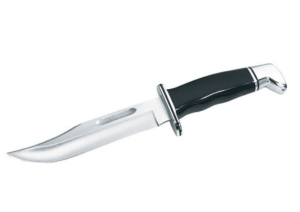
My poor teacher - Mrs O'Connell - had her hands full - even more so than she realized.  One day, she took a show-and-tell item away from me, and sent me to the principal's office.  Apparently 4th-grade teachers get a little nervous when you bring a huge Buck knife to class - even in 1980. I cried the whole way to the principal's office.  And I cried again, at the end of the day, when I picked it back up.  And then for good measure, I cried again, when I showed Mom.

On the playground, I understood none of the social rules.  Flying solo in the classroom didn't prepare me for changes in social cues and interactions there.  More tears, nearly every day (which did nothing to help my social standing.)  And kids are always kind to the new, strange, weepy boy, right?

Right.

Mrs O'Connell's class also had a rule that all assignments had to be turned in on paper with no torn edges.  No ripping the page out of the spiral-bound notebook and handing it in.  If it was torn out, you had to cut the edges.

Her handing my homework assignment back and telling me to cut the edges off, that was just another straw on an already overloaded camel.  I broke down in sobs.  Again.  Mrs. O'Connell reached for the box of kleenex.  Again.

Unsurprisingly, for that six weeks my report card had decent grades, except...

Monday, June 29, 2015

Conflicted

Within the coming months, the church that I grew up attending will be torn down.  Developers are paying top dollar for high-priced real estate. They are building apartments - nice apartments by the sound of it. And the church is retaining a small lot on the back end of the property to use as a chapel.

I am finding myself feeling very conflicted about it.

The building is old. The ceilings are too high, and heating costs have got to be through the roof. (See what I did there?) There are unending repairs and additional needs and a diminishing population of people to provide the funds for those repairs.   

But in that church, I heard some of the most amazing music in my life, and developed a love of acoustics and pipe organ music and the raw power of a full chorus. 

I worshipped in that church with my family, sitting in the pew where my grandfather had sat for 80 years.  I heard thundering sermons by Elmer Piper (and discovered that I am not near as much of a hell-and-brimstone Baptist as I had thought I might be) and gentle sermons about a loving God delivered by Jack Causey.  I was baptised there, and played basketball in the recreation building.  I was at church for Sunday morning, Sunday evening, and Wednesday night meetings.  I sang in incredible choirs, taught a three-year-old choir, and even led an evening service during my senior year in high school.

I was also bullied there mercilessly by mean teenagers.  I was condescended to by pinched-faced middle-aged spinsters who disapproved of any evidence of youthful exhuberence.  I was even kicked out of one high school Sunday School class, because I got angry at a teacher for singling me out for a group infraction. (I never went back.  Later that week, I was invited to my granddaddy's SS class, where I stayed for the rest of my time there.)

I fell in love with the old people in the church.  My Sunday school class was co-taught by Harry Lee Thomas and my Granddaddy, Stick Lawton.  And every week, I learned something different about the context and the history of the scriptures from men who lived their faith. I sang with them, I shared times of prayer with them, and attended a number of their funerals.

At PSBC, I met mentors in my faith.  I learned about the Bible.  I developed a relationship with my Creator.  I felt safe and was loved.

And at PSBC, I was betrayed by a pastor, who failed to keep a confidence.

Church will always be a complicated place.  In it, there are people.  Real people. Saints and sinners.  Sweet people and mean.  Some like kids.  Some do not.  Some appreciate the difficulty of fitting in, and will hold a 13-year-old boy's hand while he cries in frustration.  And others ridicule him for not conforming.

So I have a host of mixed emotions and memories about the tearing down of my church building.  The stained glass was nothing intricate, but every time the sermon got long, I would count the number of blue panes, yellow panes, green panes. Those glass panes will be taken down, counted, and sold.  The enormous cathedral ceilings, reverberating sound, will be silenced. The halls through which I ran, the rooms where I crossed arm over arm and said with ten other boys, "As a Royal Ambassador, I will do my best...", those places will be gone. The sanctuary where my sister and I re-created the Pieta for a Good Friday service (getting white grease paint removed from the entire body is tough, in case you were wondering) will be demolished.  The place where I stole kisses from my first girlfriend in dark corners where youth leaders might not have been watching... torn down. The location of my first solo, the place where I attended weddings and funerals and lock-ins and cook-outs and Easter Sunrise services.... Gone.

But the church is not.  Whenever I see an online post of love from Kay Perry or Marty Price,  I see the church, alive and well.  When I read about Kimberly Graham's children or Candace Williamson, or the music that they teach, I know that my church - the one made up of the people who loved and served my Creator - is continuing on.

Nevertheless, I am still sad about losing the building.

Such things happen.  People have moved to other churches, and are doing God's will where they are.  I have been taught all my life that the church (like Soylent Green) is made of people. Even the church history (available on Amazon here) has on the cover "More than a Building - A Family of Faith".  But there is still a location, right there in West Greenville, that holds a sacred place in my memory.  And all those memories - both the highs and the lows - will forever be associated with 'Church' in my mind.
History of PSBC available online here.

I will miss the beautiful building that housed my church during my childhood.


Wednesday, June 3, 2015

Age is just a number

Her white hair, tied into a messy bun.  Her face, deeply lined, framing the brightest blue eyes you have ever seen.  Her face, permanently creased into a smile, looking like she is responding to a delicious joke you just told.

Skippy is friends with my uncle Harry, and when I came into town last time - for the funeral of my cousin - she offered to put my mother and me up for the night.  We showed up, and got loved on by the most delightful 87-year-old there is.  We talked for hours - about her garden, about her doll collection, about the beautiful land she has overlooking the marsh on Myrtle Island.

She reminds me of Cool MA. My compadre's grandmother lived around the corner from me when I was growing up in Greenville, and she was one of the most amazing, kindest women I have ever met. The stories I hear of her bestow on her the status of a minor deity.

Cool MA reminded me of my Nana, who was a chief cheerleader for everything her grandkids did.  She walked the beach for hours, marveling over evey shell we found, remarking with ineffable happiness how smart, how strong, how fast, how observant we were.

My Nana was very reminiscent of my Aunt Lolo.  Lolo was the brightest, happiest, kindest, most adventurous woman I have ever met.  I always loved going over to her house, even when I was at an age where going over to an older family member's house holds no appeal.  She was just cool, and had fascinating stuff to look through from her many travels.

Beautiful, strong, smart, kind, loving women.  And as they grew older, impossibly, their beauty deepened. In a culture that worships youth and strength and virility and unlined faces.... and in a culture that subsequently discards the young and beautiful when they become neither, I am blown away by these ladies, who seemed to weather the process with such incredible grace.

My cousin Andrew (genetic researcher, runner, musician, and dancer extraordinaire) is running in his second marathon, and blogging about it as he does his prep.  His running of the Chicago marathon is benefitting a charity that provides safe, affordable housing for seniors (if you feel so inclined to do such things, please support his effort).  His writing explores some of the issues about aging, and includes inspirational stories of people who bloom in old age.

As I am solidly (and getting more so every year) middle aged, I find myself fascinated to read what a scientist is thinking about the aging process.  The issues with memory.  The loneliness (so far his best blog entry here, which included a nice bit on juggling.) The life changes. 

And as I read his blog, reflecting on these amazing women in my life, and I find myself trying to figure out what made them special.  How did age develop such a lovely patina on

Friday, April 3, 2015

To-Do List (Broccoli redux)


This year, I planted broccoli in my usual way.  Which is to say, I churned up enough ground to disturb deeply buried archaeological sites (and likely nicked a septic system in the process) and chopped the dirt until I was tired of doing it.  And then scattered seeds roughly in a row, with very little attention being paid to spacing or exact placement.

And then I sat back to watch it grow.

My wife, who understands both plants (and me) better than I do, has devoted a few minutes each day to watering and fertilizing the 'row'.

And the broccoli has started to emerge. (Insert odd gleeful dance here).

Predictably, however, the seeds were spread in 'rows' that more resembled 'bunches' or 'clumps'.  And I have seen this before, and know what comes next.

I have to try and figure out which of the individuals are the most likely to give me good broccoli.  And then pull out all the rest.

This is a hard thing for me.  I want to see all of my seedlings thrive.  But without pruning, without thinning the herd, all of them end up puny, starved, or dead. Removing the competition (whether it is weedy competition or competition among healthy seedlings) is the only way to allow the final product - the 'keepers' - to do well.

Tuesday, March 31, 2015

My Inner Geek (MIG, for short) Goes to Slaughterhouse 4

My Inner Geek had a field day today.  MIG always loves getting let loose.  And in my current job, the opportunities for free-range geek are few and far between.

A couple of weeks ago, I taught a class about gambling in Old Testament times.  It was a fun class, with a nice tie between gambling and prognostication, and we ended the class by throwing bones and keeping score, using rules that had been recorded from the 1st Century AD. 

What we used in that class were deer astralagi; a small talus bone at a joint found in the hind leg (snorts to self about the 'hind' leg....).  They were available from an etsy site, and they cost about 20 bucks for the four 'dice' we used. 

Worth.  Every.  Penny.

What I had really wanted, though, was lamb tali.  (Taluses?  Whatever.)  I had called around to a couple of butchers in the area, and they had no idea what I was talking about, had even less interest, and suggested that I talk to a sheep farmer.

Wait.  What?  A sheep farmer.....  Hmmmmm.

As it turns out, an acquaintance of mine has a sheep farm just north of New Orleans.  Charlie used to live down the street from me, and his company sells organic lamb (and beef, and goat) to restaurants and retail clients around the entire area.

So I contacted him, asking for his help to obtain some sheep knucklebones.

His reaction was laughter.

"Sure! But i have no idea what that is. Sheep dont have knuckles haha."

Saturday, January 31, 2015

Recital

Kathe and I have been taking music lessons for a month.  I have my banjo; she has a keyboard (although what she really wants is a piano.)

We are adult music students, a bit of a rarity.  And we both are convinced that we can do it, and we devote the time to practice, like we never could (or did) when we were kids. We set aside time, and are very protective of that time, because we have a goal in mind. We want to play.

What we are doing is very different from what kids do when they are given lessons. 

The typical child lesson (I have made some assumptions here) goes something like this: MomnDad decide child progeny (CP) is going to learn an instrument.  They give CP a choice: oboe or saxophone; CP chooses the one CP think is best/coolest/least dorky/easiest-to-hide-in-the-locker-at-school.  (Or, if you have a piano in the house, you get to learn piano).  M&D buy the instrument, and go about finding a suitable tutor.


And when I say ‘suitable’, what I really mean is ‘affordable’.

CP is encouraged to practice, and at the end of the semester/year, is rewarded with an opportunity to dress up and give a concert, that M&D attend.

From CP’s perspective, here is what happens:

M&D: “Do you want to give up the last remaining shred of video game time to practice the tuba, or to practice the piccolo?”

And just like that, CP is suddenly forced to give up a half-hour to an hour of every day to practice an instrument that he does not love, and then spends an additional hour with an adult who gets to be a

Sunday, January 4, 2015

agricola, agricolae agricolarum....

I went to my first banjo lesson.  It was terrible.  I was completely out of rhythm, my fingers were stiff and clumsy, I got frustrated and, for the first time since I bought it, I hated that damned banjo.

Afterwards, I got in the car and Kathe, all excited, asked me how it went.

"It was awful," was all I said.

What happened?  Since I have been writing here, it has been "banjo" this, and "music" that.... and suddenly, I just detest the bloody thing?  How is that even possible?

Monday, December 22, 2014

The Joke's on YOU

I remember my first joke book. I know that my parents regretted the day they gave it to me, because I loved telling the jokes over and over, even the ones I didn’t understand.

Q: Who was the tallest president?

A: Dwight Eiffeltower

HAHAHAHAHA!

5-year old Crorey, in a stage whisper aside: (Mom, can you explain that one to me?)

Every one of the jokes, as it was explained to me, opened me up to a new way of looking at words. What I learned from that book (and the hundreds of silly joke books since then) is that there are unexpected relationships between unrelated words, and the result of the comparison between the two is…. is laughter.

Well.... sometimes.

I love analogies. I love metaphors. I love taking unrelated phenomena, finding a connection between them and comparing the two. Sometimes the result is just quirky (today’s effort was a weird combo of the ‘fourth wall’ in theater and the ‘fifth wall’of the Pentagon). Other times the connection is more poignant. But it is the way my mind works, and so if I am not working out a new pun to try out, my creative juices are usually trying to parse out an unexpected relationship between two dissimilar concepts.

Saturday, December 13, 2014

Joy and music

There are moments when you feel your heart is going to burst from happiness.  Last night was just such a moment.

My grand kids, Rémi and Gabi, came in from Dubai. After an exhausting 19 hour flight into Dallas, followed by a nine-hour drive to New Orleans, they finally arrived.

I had been bouncing in my seat all day in anticipation.

They arrived, a little travel worn and obviously weary, but the conversation just flowed.  They loved on my dogs, remarked how small they now seemed (since they last saw our guys, they have adopted two large dogs of their own), and then the magical really started.

Rémi and Gabi are musicians.  They play anything they can get their hands on, and there is almost always an instrument within easy reach (one of the tasks for today will be to go to pick up some drum sticks for Gab, who accidentally left hers behind). Rémi picked up his guitar and started playing riff after riff.  Blues, hard rock, classical guitar... the music just flowed from fingers faster than sight.

Ok, it's true. I am both irritated and jealous.

And then I did something that was outside of my comfort zone.

I picked up my banjo.  And with fat, clumsy fingers, I began to pick. Simple tune, missed notes, out-of-tempo ornamentation.  But I played.

Thursday, November 27, 2014

Cultivating a Garden

So I ran across a quote from the end of Candide today - "We must cultivate our own garden". While the rest of the blog was about guarding against the unproductivity of unbridled optimism (and the concomitant self deception that accompanies it), it touched on a topic near and dear to my heart right now - failure. I am teaching myself to play banjo. It is a painful process. I love learning language, even with the pain and embarassment of getting it wrong. I am in a new job, and I gloriously suck at it. Because I am learning.
 
 
Maybe pure optimism isn't an optimal feeling. Maybe 'hope for the best, prepare for the worst' is a great summation of the motto that should be used instead. But I like the idea of each step in the learning process being seen as a process of weeding. Tending the garden. Encouraging the plants I like, discouraging those that I don't.
 
 
And there might be short cuts. Spray everything with toxins. Use massive industrial machines. Keep chickens and pigs and cows in boxes where they are fed chemicals and recycled chicken parts.
 
 
But the real value gets added at that moment when you realize you have been using the word in Russian wrong, and you laugh with your new friend about it.
 
 
When you hit that banjo lick right for the first time, and then try it ten times more.
 
 
When you watch the radishes come up, thinning out the ones that make the density too high. Fertilizing, mulching, weeding. Watching the pepper plants go from small to large.  Blooming, putting out peppers, turning from green to yellow.  Then making my pico de gallo.


Watching the cotton grow, pink flowers, then boll. Eating my own sunflower seeds.  Popping the popcorn that grew in my garden.


Playing my banjo, even when I'd rather be watching tv.
 

Cultivating our own garden, just maybe, is the only thing that is worth our time.

No short cuts.

Monday, November 24, 2014

"Only too old when you're dead"

When is it too late to start?

"My belief is you're only too old when you're dead."

A friend of mine posted that sentence this weekend, and it just resonated with me.  I have never met Windi.  We are friends of mutual friends on facebook, and admire each other from that distance.   (Well, I can only speak for myself - I admire her...).  As our mutual friend said once, 'Windi is a force of nature - she decides to do something, and throws herself into it with no sense that she is not world class at it.  And pretty soon, she is teaching her flamenco instructor moves.'

Is it any wonder I am a fan?

Windi decided to start learning the fiddle, so that she could play Irish tunes.  Nobody showed her how, she just bought a violin, accessed some online videos and started playing. 

At first, she posted progress online, and her playing was somewhere south of virtuoso.  But I was intrigued, and followed her progress, always looking forward to the next video sample.  It was not long before the tunes were not only recognizable, but even pretty good.

Now, just one year removed from her first sawing of bow and string, she is looking for a band to play with.  I can't wait to hear her first jam session.
________________________________________________________________________________

My sister Caroline picked up the accordion when she was in London a couple of years ago at age 39.  And no, she was not looking to polka or even (sadly) zydeco.  She had in mind the image of the French cafe accordion player.  And for several months, she just played (um) quietly in her apartment in her spare time, teaching herself left fingering and right keyboarding and chord progression, and....

And one day she had her window open and people under her apartment shouted up some encouragement.  She has since played in bars and auditions and teaches herself new songs all the time.
________________________________________________________________________________

What is it that you feel is beyond you?  Sure, high school French was brutal, but you find that you are intrigued by Mandarin Chinese? You have a hidden passion for stargazing, and want to learn astronomy? Or is there a musical instrument that you want to play?

Is it too late? Is it true, that Old Dogs Cannot Learn New Tricks?

Our understanding of neural pathways is based on a use-it-or-lose-it model.  If you have not learned what you need by the time you hit puberty, it is too late.  No late-life prodigies in music.  No second career geniuses in foreign languages.

Linguistics studies particularly point to an early developmental time frame when language acquisition is possible, and anything after that is impacted by the fact that you didn't learn it when you were 5 years old.  The brain wires itself along specific neural pathways, linguists tell us, and re-routing those pathways is almost impossible.

Badgerdoodle.  Absolute poppysmeg.

We rewire neural pathways all the time.  We learn new words, new names, and we stick them in  our memory banks in different ways.  Yes, we adults have established a way of learning and those pathways are entrenched.  That might make it hard to organize that new knowledge.

But we also have experience under our belts on what learning works best for us.

Maybe you are a kinetic learner, and know that you learn best while doing aerobics.  Or you are an auditory learner, and can put things to music to memorize them.  Because you have experience with learning, you can take advantage of what you already know about yourself to make the learning easier.

I am convinced that the main difference between adults and kids is embarassment.  Not that kids are not embarassed by making a mistake in public (I recall a particularly horrifying moment when I was in fourth grade crying while cutting edges off of the paper I was turning in) but that adults encourage the kid when mistakes are being made.  And adults who are motivating themselves see the embarassment as a reason to stop.

But consider this: when you were learning your first language, how many times did your parents have to repeat the following sequence before you got it right?

"Dat gog toy."
"That's right, son.  That's the dog's toy."
"Dat gog toy."
"That's right. That's the dog's toy."

Why would it be any different to learn to speak Basque?  New words, new order, new syntax, new everything.  We are going to mispronounce the words, and use the wrong forms, over and over. We will fail and grit our teeth and try again, and fail again.  Just like when we were kids.  Is it just that we are more hardwired to high expectations?
______________________________________________________________

My friend Adam works in knowledge management, and has been studying how organizations share information. And the change to sharing of information in the corporation requires three things: (check out his blog), motivation, ability, and trigger.

I think that the analogy is pretty apt for use in learning any new task, not just in corporate learning.  We all use these tasks in taking on a new task that we have never done before, whether learning computer coding or making French sauces.  We need the motivation, we need the ability, and we need the trigger.

The motivation is probably the greatest change between learning a new task for a child versus learning a new task for an adult.  Mom made me take piano lessons when I was in second grade.  What was my motivation there?  Was it because I decided I needed to be able to play music? 

Um, no.

But when my wife decides that she wants to learn the piano as an adult, what is her motivation?  No longer is it just a matter of pleasing her mom.  She is her own motivator.

The ability sector is "teaching people how to do things." This is the practice.  The physical repetition of the fingering, repeating the vocalizations until you can make a voiced glottal fricative on command, or the practicing of the steps until the samba is second nature. 

The final piece, as I understand it, is the trigger - the place where we re-create the response.  If you always listen to your Russian conversation tapes in the car on your drive to work, then your Russian is going to be strongest in the car, where the association is strongest (part of the reason that you are suggested to practice taking standardised tests in the room where you will be taking them). 

None of this is beyond the grasp of someone who wants to learn.

Will it be frustrating?  YES.

Will it be vexing? YES. 

Will you get a strange gratification when something makes sense? YES.

And see, that is the beauty of learning anything new - the gratification (elation, even?) of succeeding.  But instead of running to mom to share the success, I get it all to myself.  And then I reinforce it with more work on the ability sector.  And reinforce it again.  And again.... smiling with each repeated success.


It is terrifying to jump into something new.  My wife bought me a banjo this year, and I practice every free moment.  But I gotta confess - I am terror-stricken when I think of playing my banjo in front of people.  My hands shake at the best of times, and the thought of adding a little performance anxiety to top it off, well, I am pretty frightened. That embarassment potential is almost reason enough to stop.
 
But maybe all that means is that I need to change the trigger.  Maybe move to a more public place for playing the three songs I currently have in my repertoire.  Stretch my comfort zone to include front porch playing.  Maybe post a short video of Cripple Creek.  Laugh at the mistakes, and know that eventually, that sentence will come out right. 
 
"That's the dog's toy." 


______________________________________________________________________________

For those who teach, a nice blog entry from the teacher's perpective can be found here. 


Monday, November 17, 2014

Red Zone

In my agency, we hold Red Zone Meetings when construction nears completion. It allows us to identify the areas in which we need to make adjustments before completing the project.  Stakeholders, construction folk, contractors, local sponsors, project managers, and even some of the brass from the Corps join together to see what remains to be completed.

It gives everyone a chance to revisit expectations, to discuss the way that the project should be completed, to talk about lessons learned, and to lay out the plans for turning the completed project over to the local sponsor.

For those of you who are not football fans, the Red Zone is the area within the opponent's 20-yard line; the area where the offense has gone 80 yards, and only have 20% before they can cross the goal line and score. Each team hase Red Zone offensive plays that are developed specifically to address the problems of finishing strong.  RZ offense is tricky: the closer you are to your goal, the things holding you back from reaching your goal seem to multiply.  When those obstacles are compressed between the project plan and project completion, it is much harder to slog your way, and frustration is greater, at the same time that execution is the most critical.

I love the metaphor.  And I have recently begun to reflect on the process of planning for the finish line. (I have always worked in the planning process, which takes place before ANY of the construction is done; this part of the process is new to me.)  And some questions have started to occur to me: What changes would you make if you knew that you were 80% done?  What adjustments?  What new plans would you put in place?

Last month, I joined a group of guys in hiking the Inka trail.  Beforehand, we heard horror stories of day 2; one co-worker who had done it said that going through her chemo treatments was easier than Day 2.  The first part of the day was brutal - we hiked from 9,000 feet above sea level to the impossible elevation of 13,800 feet, and celebrated at the top of Dead Woman's Pass.  Then we hustled down to 9,000', where we met the porters, who had run the same route (loaded down with our equipment and food and tents and....) who had lunch prepared for us.  Thirty minutes later, we were headed back up to the second pass, at 13,200'.  It was an exhausting climb: the oxygen was thin and climbing was tough.  More than anyone on our trip, I struggled with the thin air, and for every fifty steps I took uphill, I had to stop for two full minutes until the gasping for air receded.

And finally, we had made it through the pass, and were headed back downhill, for the rest of the day.  Out of a ten-hour hike, the last two hours were going to be all downslope. We were exhausted, but the camp slowly started to get closer and closer. 

And with only a half mile to go, we were able to see the bright red tents welcoming us with the promise of popcorn and hot chocolate (Llama Path's version of happy hour).  And the guide looked at us and said, "OK, that archaeological site (he pointed to the left of the trail) is the last thing we do before we head to camp."

Straight up.

My friend Miles and I had an honest conversation about whether we were going to go up and participate.  I mean, a huge amount of the appeal of the trip was the archaeology.  But after 11 hours of the hardest hiking I had ever done, I wasn't sure if I was up to another push.  I had not included the uphill climb at the end of the day in my RZ plan.

What happens in the Red Zone is more important than what heppens on the rest of the field.  The decisions made there are more critical, and affect outcome more than any other location. 

So what am I doing in the last hour of an eight-hour day?  Coasting?  What does my Friday afternoon feel like?  Am I pushing hard to get things done, or already mentally cracking the revenue on the bottle at home?

Football teams are defined by the success of their Red Zone offense. And more importantly than reputation, the really good things happen if the effort in the RZ is successful. 

My friend Miles looked at me, and told me it was my choice.  That he would go with me straight to camp, skipping the archaeological site, or we could go up and see what the guide was showing us.  The result was one of the most beautiful views I have ever seen. 


Maybe, just maybe... I'll push a little bit harder in the Red Zone. The payoff is pretty awesome.